
Digital working-time records: what the Ministry of Labour is preparing and why cloud clock-in fits
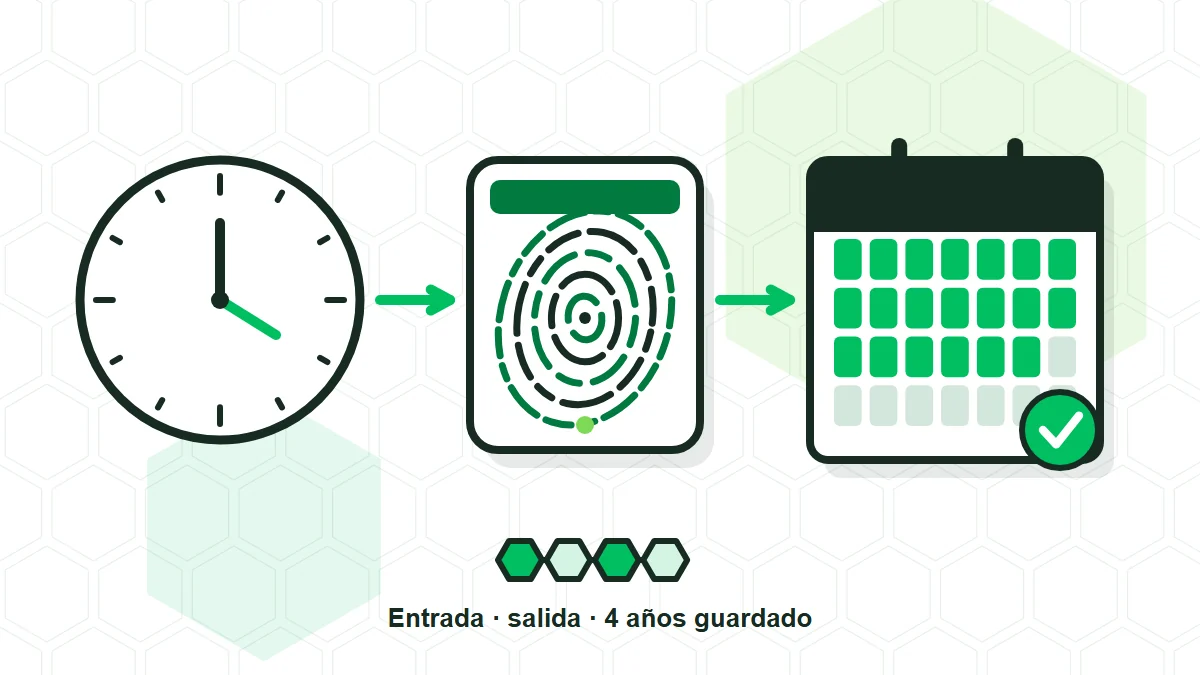
Recording each employee’s start and finish time has been mandatory in Spain since 2019, and today a well-kept paper sheet is still acceptable. That is going to change: the Ministry of Labour is drafting a royal decree that requires the record to be kept “by digital means”. It has not yet been published in the BOE; according to the draft, it would come into force twenty days after publication, so it is worth having it sorted beforehand.
What the draft says
- Each employee clocks in personally and directly, at the start and at the end.
- An entry can’t be changed without the authorisation of both the company and the employee, and any change leaves a trace of what was altered and by whom.
- The Labour Inspectorate must be able to check it at any time, remotely as well.
- The terminal can’t be in an area open to the public. In a bar, that rules out the counter.
- If the system fails, times are noted by other means and moved to digital as soon as possible.
Why the cloud makes it easy
Cloud time-tracking systems, such as ZKTeco’s GoTime Cloud, store clock-ins online instead of on a computer on the premises. There’s no need for a server in the back room or for opening ports on the router, and they are checked from a web browser. Staff can clock in on a fingerprint, card or face terminal, or from their phone if they work elsewhere, with the clock-in location recorded. For a business with two premises, or with staff moving between sites, everything is in one place, and the report for the accountant (gestoría) is produced automatically.
If you currently record hours on paper or in an Excel sheet, there’s no need to rush, but it is time to choose: once it is in the BOE, twenty days go by quickly, especially if it lands in high season.